International Strategy Workshop
Turning Strategy into Action
A strategy workshop is successful when it creates more than alignment. It enables people to make decisions, take ownership and turn strategy into action.
Most organizations have good ideas. They define ambitious goals, develop strategic roadmaps and invest significant time in planning. Yet one critical question often remains unanswered:
How do you turn strategy into action?
A strategy does not create value simply because it exists on paper. It creates value when people share a common direction, take ownership and make decisions that move the organization forward.
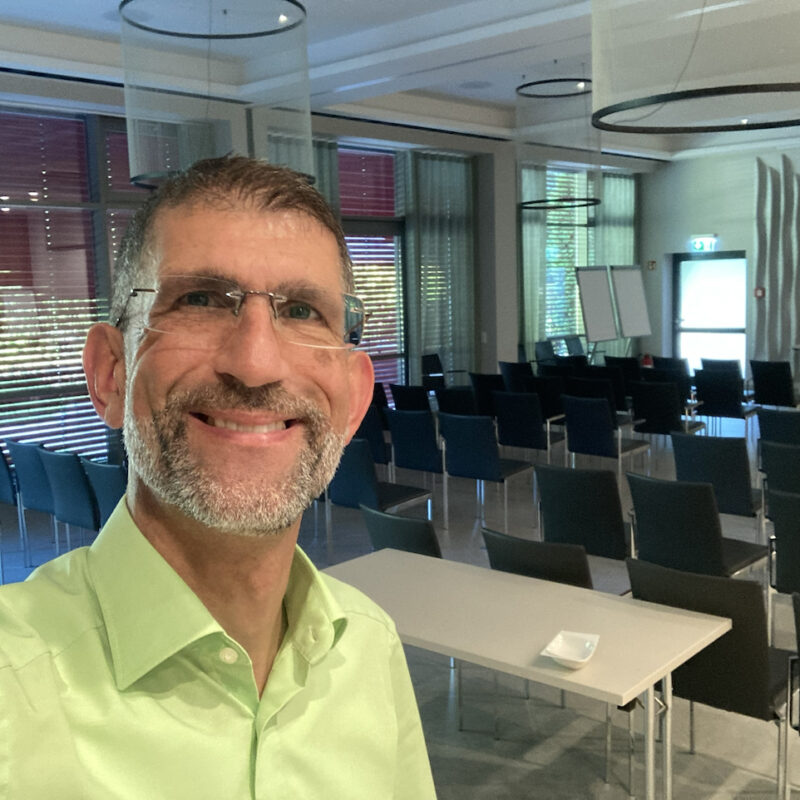
This was exactly the focus of an international strategy workshop I recently designed and facilitated.
Over three days, 68 participants from 27 international locations worked together on how to turn their strategy into action. The objective was not only to develop strategy, anyway the direction was worked out in workshops before, but to create the conditions for turning strategic intent into concrete action.

Organizations usually know what they need
One principle has guided my work from the very beginning: Organizations usually know what they need.
For me, organizational consulting is therefore not primarily about providing answers from the outside. The real value is in designing an environment where people can, want to and are allowed to develop, evaluate and commit to their own solutions. While at the same time remaining open to external perspectives.
Because in most organizations, the knowledge, experience and ideas are already there.
The real challenge is bringing together the right people, the right topics and the right strategic framework so that meaningful decisions can emerge.
That was the foundation of the entire workshop design.
Designing a workshop that creates ownership
The workshop design itself became one of the key success factors. Before the event, several design decisions were discussed intensively and challenging. No winding up an endless role of powerpoints.
All twenty-seven locations introduced themselves to each other. Success stories from Australia, Asia and Germany highlighted existing strengths across the organization. A retrospective made previous collaboration visible before participants entered an Open Space process on the final day.
Rather than presenting predefined action plans, participants identified the most relevant strategic topics themselves, formed interdisciplinary groups and committed to the next concrete steps.
The objective was never to maximize discussion. The objective was decision-making and ownership.

Focus is created by structure
Some workshop elements initially met considerable skepticism.
- Timeboxing
- Two-minute pitches
- No PowerPoint presentations
Ironically, these became some of the most appreciated aspects of the workshop. Why?
Because they created focus.
A two-minute pitch forces people to identify what really matters. Time limits prevent endless discussions. Without slides, people actually listen to each other.
During the final check-out, participants repeatedly highlighted exactly these aspects – surprising for my client:
“The two-minute pitches helped us focus”
“Without PowerPoint we listened much better”
“We were able to make decisions”
“The answer is in the room”
The daily check-outs clearly showed how the group evolved throughout the three days.
Frequently mentioned keywords included:
- Commitment
- Open Communication
- Listening
- Team Spirit
- Networking
- Collective Focus
- Respect
- Synergy
Some comments summarized the experience remarkably well:
“Knowledge is already in the group”
“We can do it ourselves”
“Together we are stronger”
“Open Space works”

One observation stood out in particular: In international organizations, misunderstandings often do not arise because people have different goals. They arise because people rarely have enough opportunities for direct dialogue.
Once conversations happen face-to-face, understanding grows remarkably fast. And understanding enables action. Communication is key.
Organizational design instead of instruction
Another principle fundamentally shapes my work. People cannot be constructifly instructed into taking ownership, they always decide for themselves [Fritz B. Simon], the so called “illusion of governance”.
German neurobiologist Gerald Hüther puts it this way:
“Self-organization and personal responsibility create discipline. Discipline imposed from the outside creates only obedience.”
A similar perspective can be found in systemical thinking. People always make their own decisions based on their logic and in best intentions based on their knowledge. So its all about sharing knowledge.
If organizations expect entrepreneurial thinking and responsible action, they must create conditions where this becomes possible. So not only expert knowledge must be shared, also management knowledge.
That means:
- a shared strategic direction
- clear priorities
- transparency
- trust
and enough autonomy for people to take responsibility.
Effective strategy implementation is therefore not primarily about control. It is about organizational design.
When design enables decisions
Before the workshop started, someone told me:
“We have never finished a workshop exactly as planned.”
On the afternoon of day three, we finished precisely on schedule. Not because discussions were shorter. But because the workshop design consistently created focus, ownership and decision-making.
For me, this was not proof of good moderation. It confirmed something much more important. When people are given the right environment, they naturally take responsibility. Read more about in my blog about organizational design.
That, in my view, is what effective strategy development is really about.
A client’s feedback
Receiving this feedback from one client made me happy:
“Alexander supported us professionally in project management and strategy development. His structured approach, clear guidance and practical solutions significantly improved our collaboration. Thank you for your professional support – highly recommended.”
Stefan Barth, CTO, EBRO Armaturen
Conclusion
A strategy should never end as another document.
Its value lies in helping people make decisions together.
Organizations rarely need another master plan. They need a shared direction, committed people and a workshop design that enables ownership. When these elements come together, strategy becomes action. Or, to use an engineering metaphor: Put the horsepower down onto the road.

Are you planning an international strategy workshop that should lead to commitment instead of just presentations? I would be happy to discuss how strategy development, organizational design and systemical thinking can help your organization turn strategy into action. Get in touch for an initial conversation.